Case Study

Where Learning
Meets Play.

Designing Purple Tutor — the AI-powered coding education platform trusted by 150,000+ students across 75+ countries.

EdTech Coding for Kids Gamification Mobile-First
150K+
Students Globally
75+
Countries
Acquired by
Miko
Purple Tutor welcome screen showing parent and student role selection, trusted by 150,000+ students from 75+ countries Purple Tutor Play section with Daily Quiz, STEM Quiz, gamification with points and leaderboards
The Context

Making Coding Fun for Every Child

In a world where coding literacy is becoming essential, Purple Tutor set out to transform how children aged 5 to 12 learn computational thinking — through live classes, quizzes, and play.

Purple Tutor is a company focused on providing live, online classes in computational thinking (coding) for children in classes 2 through 9. Founded by educators and technology leaders from IIT Bombay, the platform was built on a bold premise: every child can learn to code, if the experience feels like play. The curriculum was designed in collaboration with two of the world's top institutions — Massachusetts Institute of Technology (MIT) and Harvard Graduate School of Education (HGSE).

Purple Tutor partnered with international schools in India and Dubai to recruit teachers who underwent a rigorous 4-stage selection process and a 3-month training program before being onboarded for teaching. The platform believed every child is a unique learner, and invested in building customised learning paths — performing thorough assessments during the first few sessions, then co-creating a tailored curriculum in discussion with expert educators.

By 2024, Purple Tutor had scaled to over 400 employees, served 150,000+ students across 75+ countries, and achieved USD 2M+ ARR. In December 2024, Miko — the Mumbai-based AI robotics company known for its educational companion robots — acquired Purple Tutor, integrating live coding classes and gamified learning into Miko's AI-powered hardware ecosystem for children aged 5 to 12.

Role
UX Advisor and Product Design Consultant
Company
Purple Tutor (acquired by Miko)
Scope
End-to-end UX: Student App + Parent Dashboard + Gamification Engine + Trial Booking
Engagement
Via Article8 (UX Consultancy)
Industry
EdTech / Coding Education / Gamified Learning
Outcome
Acquired by Miko (Dec 2024)
Platform
iOS + Android Mobile App + Web
Reach
150,000+ students across 75+ countries · 400+ employees · USD 2M+ ARR
The Challenge

Two Audiences, One App, Zero Boredom

Designing an experience that keeps children engaged in learning to code while giving parents visibility, control, and confidence.

The fundamental design challenge was dual-audience: children and parents have completely different mental models, motivations, and interaction patterns. A child opening the app wants to play a quiz, challenge a friend, or earn bananas. A parent opening the same app wants to track their child's learning progress, book a trial class, or review curriculum alignment.

Making it harder: the children using Purple Tutor ranged from 5-year-olds who could barely read to 12-year-olds who wanted to feel like real coders. The gamification had to scale across these wildly different cognitive stages — engaging enough for a kindergartener, yet not patronising for a pre-teen studying AI and Machine Learning.

In India's crowded edtech market — with WhiteHat Jr, BYJU's, and Cuemath competing for the same parental wallet — the app couldn't just be educational. It had to be the app kids actually asked to open.

Research & Discovery

Understanding Two Worlds

Insights from observing children learn, interviewing parents, and studying how gamification drives retention in young learners.

Kids Learn Best When Competing
Children were far more engaged when learning felt like a game with peers. Multiplayer quizzes, leaderboards, and real-time competitions drove 3x higher session retention compared to solo learning modules.
Parents Want Proof, Not Promises
Parents didn't trust marketing claims. They wanted to see tangible evidence of learning outcomes — quiz scores, skill progression, teacher feedback. The trial class booking was the critical trust-building moment for conversion.
Reward Loops Drive Daily Habits
The "banana" virtual currency and badge system created a compelling daily loop: log in, play a daily quiz, earn bananas, unlock challenges. Children who engaged with gamification within the first 3 days showed significantly higher long-term retention.
Profile Switching Is Essential
Many families had multiple children using the same device. Seamless profile switching — with each child's learning path, quiz history, and banana balance preserved independently — was critical for multi-child households and reduced parent frustration.
Strategic Decisions

Four Bets That Shaped Purple Tutor

The design decisions that transformed a coding class into a gaming platform kids wanted to use every day.

Decision 01
Parent-Child Dual Interface
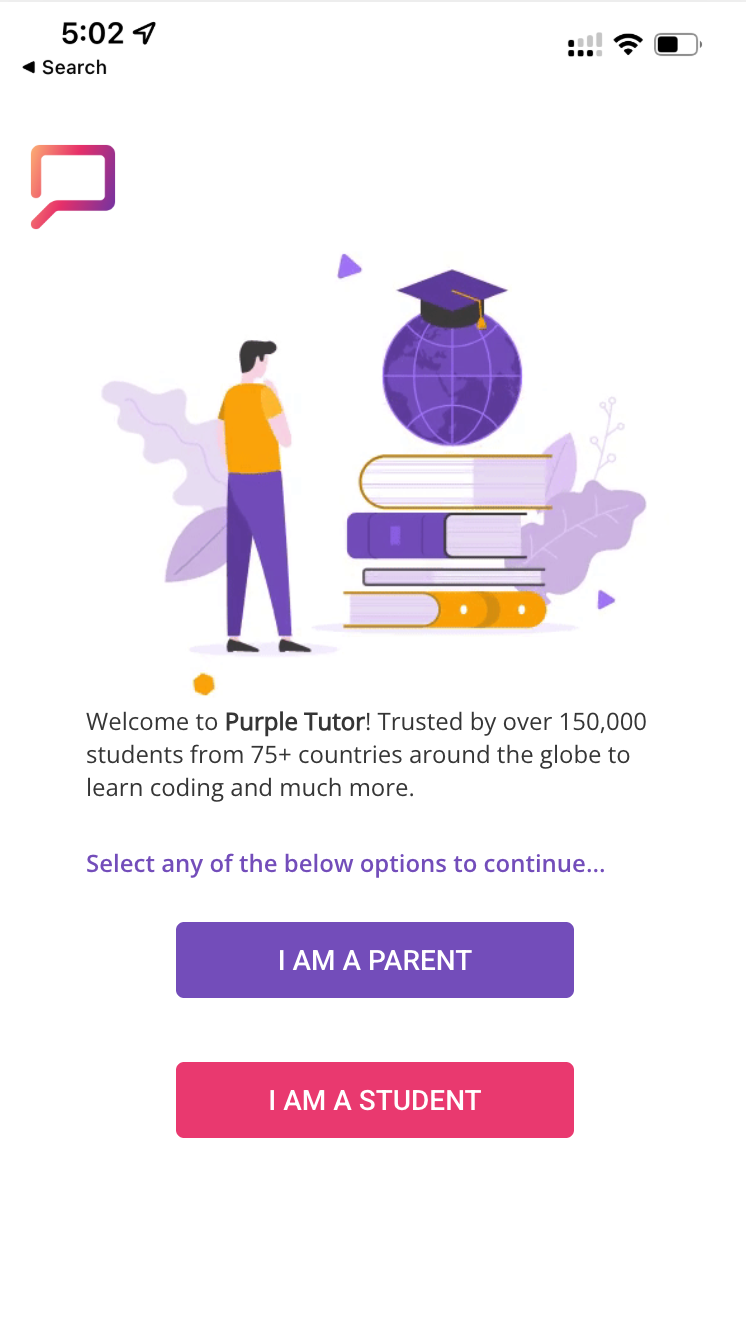
Rather than building separate apps, we designed a single app with contextual role switching. Parents see progress dashboards, trial booking, and curriculum details. Children see quizzes, challenges, leaderboards, and friends. The "I AM A PARENT / I AM A STUDENT" entry point established the right mental model from the first interaction.
Chose: Role-Based UX Over: Separate Apps
Decision 02
Gamification as Core Architecture
Gamification wasn't an add-on — it was the architecture. Daily Quizzes, STEM Quizzes, multiplayer Challenges, banana currency, leaderboards, and skill badges formed the primary interaction loop. Children earned bananas to unlock quizzes, competed against real players globally, and progressed through Beginner, Whizard, and Expert tiers.
Built: Game-First Learning Over: Content-First Learning
Decision 03
Frictionless Trial Class Booking
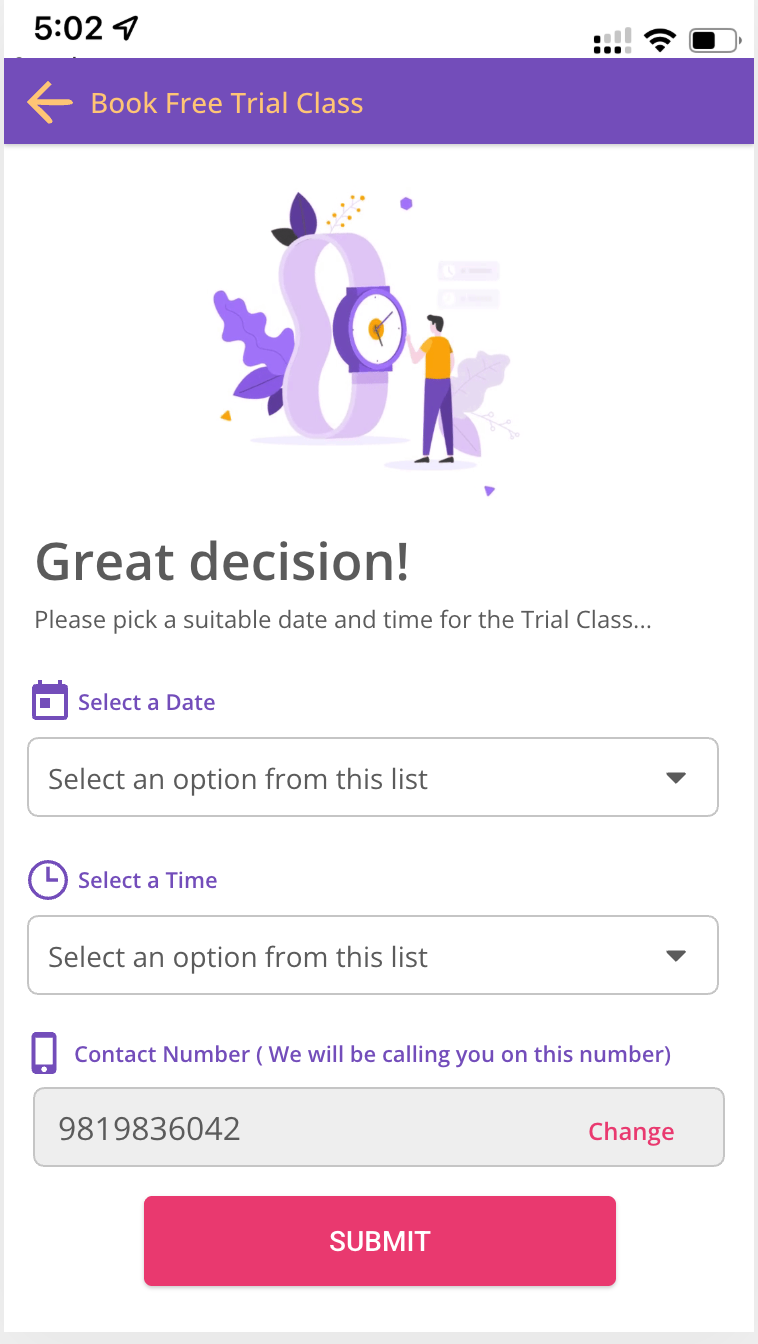
The trial class was the single most important conversion moment. We designed a minimal 3-step booking flow — select date, select time, confirm contact — with encouraging copy ("Great decision!") and friendly illustrations. Removing form fields and reducing choices at each step increased trial completion rates significantly.
Chose: 3-Step Booking Over: Multi-Page Form
Decision 04
Social Learning Through Challenges
The "Create a Challenge" feature let children build custom quizzes, choose topics (Mathematics, STEM, General Knowledge), set difficulty levels from Easy to Pro Max, and invite friends or open it to all players globally. This transformed passive learners into content creators, driving organic engagement and peer-to-peer learning loops.
Built: User-Created Challenges Over: Platform-Only Content
The Solution

Play, Learn, Compete, Grow

The key features I designed across Purple Tutor's student and parent experiences.

Surface 01

Student Experience — Play, Quiz, Challenge

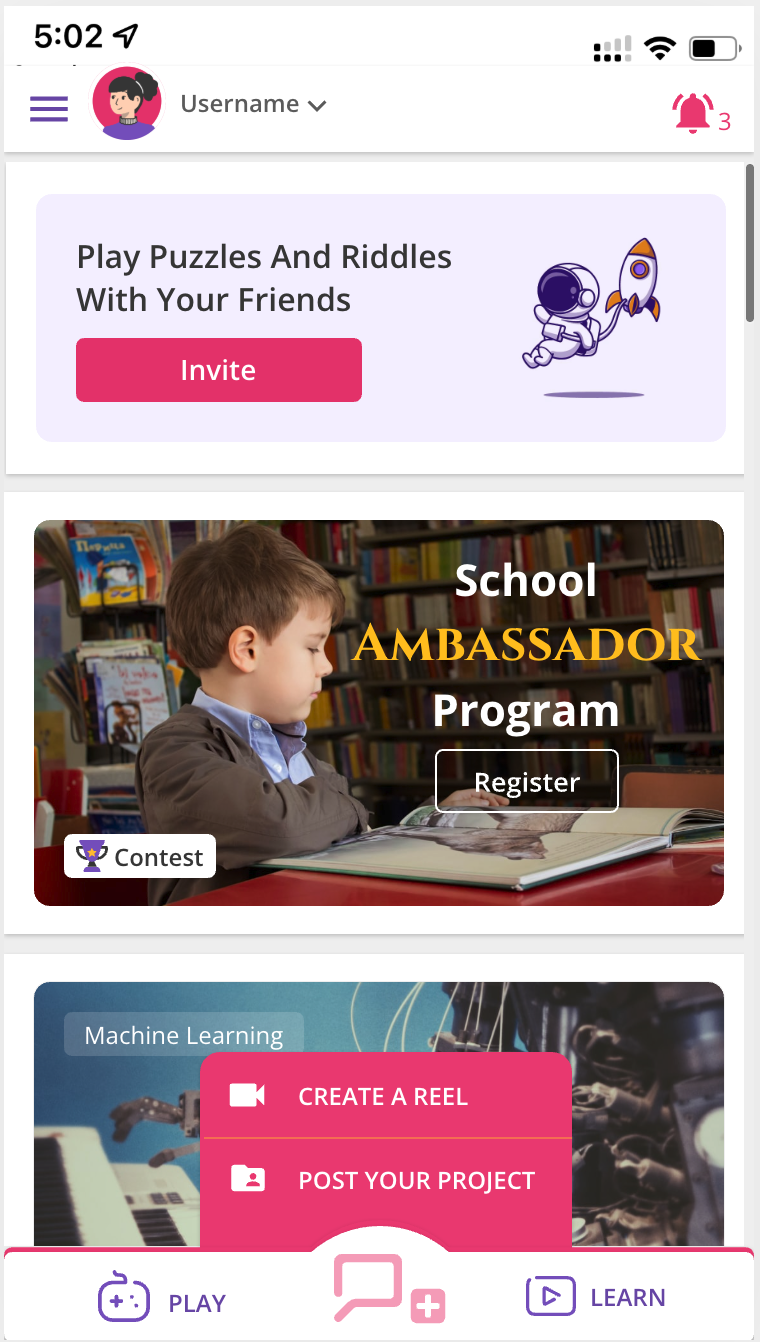
The student home screen was designed as a content hub — not a dashboard. Prominent action cards for Play, Learn, and social features (Invite friends, Create a Reel, Post Your Project) gave children multiple entry points to engage. The home feed surfaced puzzles, Ambassador Program banners, and Machine Learning content to spark curiosity beyond the immediate curriculum.

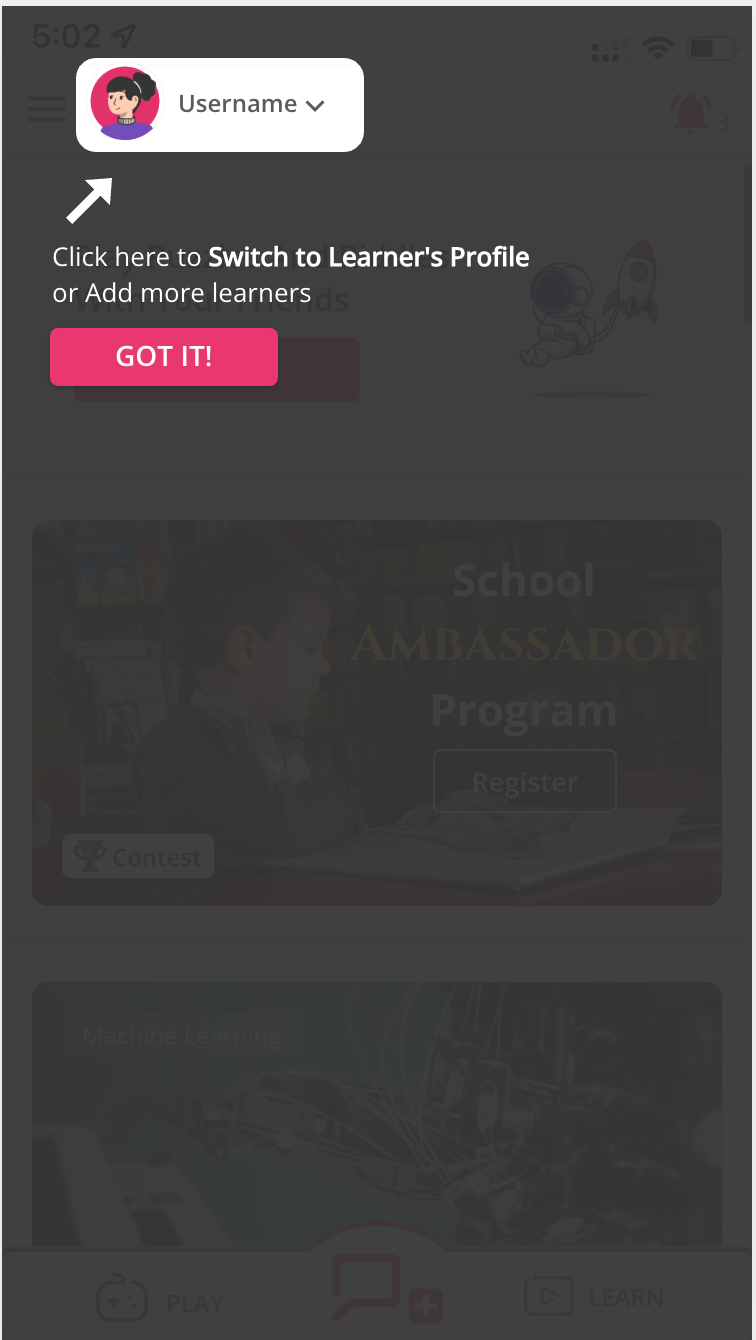
The onboarding flow used a clear "I AM A PARENT / I AM A STUDENT" role selector with friendly illustrations, establishing context before any content loaded. A profile switcher at the top let siblings swap between learner accounts seamlessly.

Purple Tutor welcome screen with parent and student role selection
Onboarding — Role selection
Purple Tutor student home screen with Play, Learn, Invite, Create a Reel, and Post Your Project cards
Student — Home dashboard
Purple Tutor learner profile switching for multi-child households
Student — Profile switcher
Surface 02

Gamification Engine — Quizzes, Bananas & Leaderboards

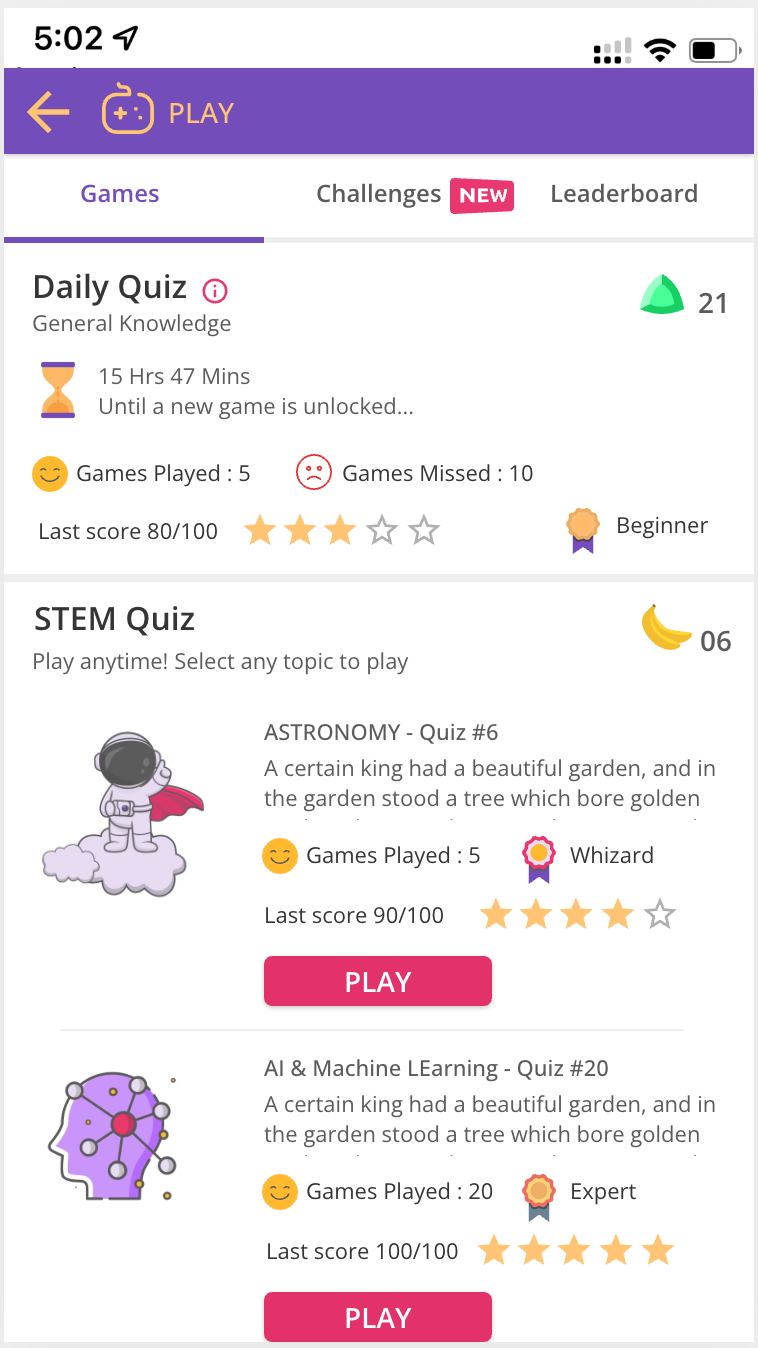
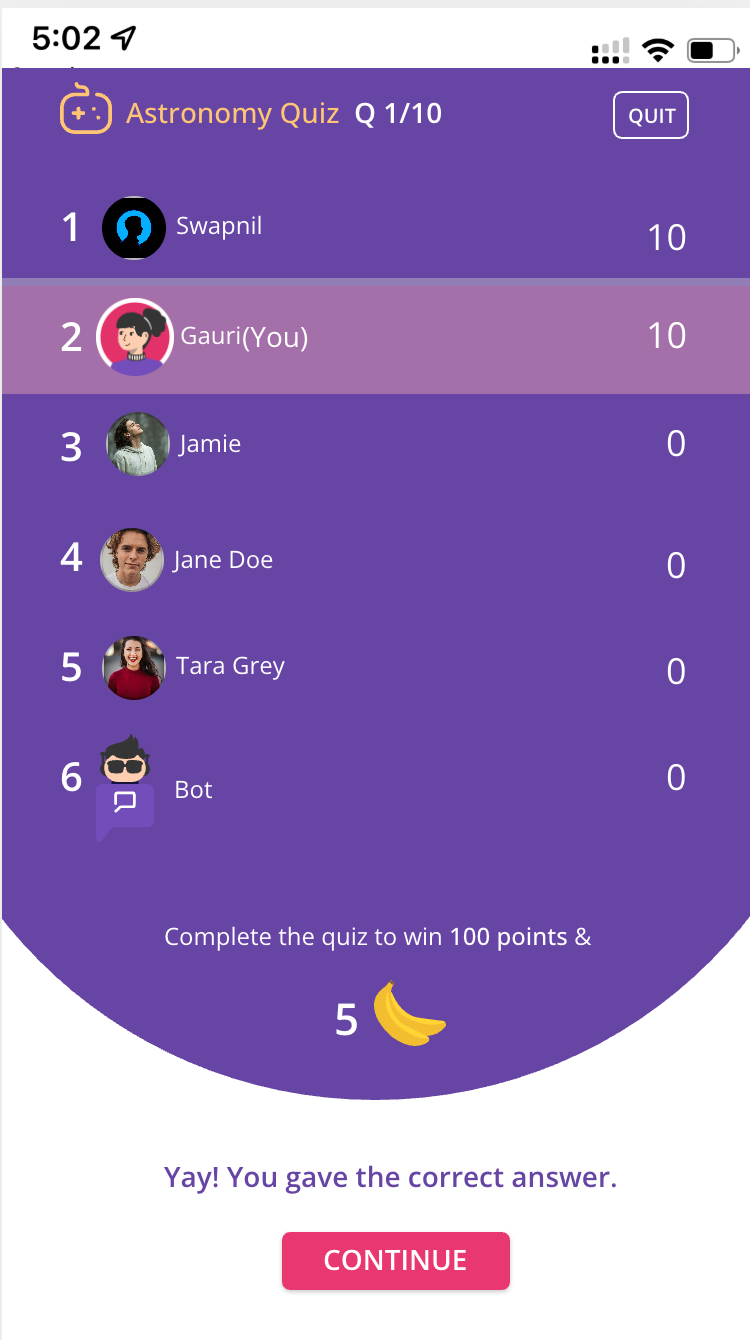
The Play section was the heart of daily engagement. It featured three tabs — Games, Challenges, and Leaderboard — with the Daily Quiz as the anchor habit. Children earned banana currency for correct answers (with 2x bonus for speed), progressed through Beginner, Whizard, and Expert skill tiers, and competed against real players from around the globe in real-time multiplayer STEM quizzes.

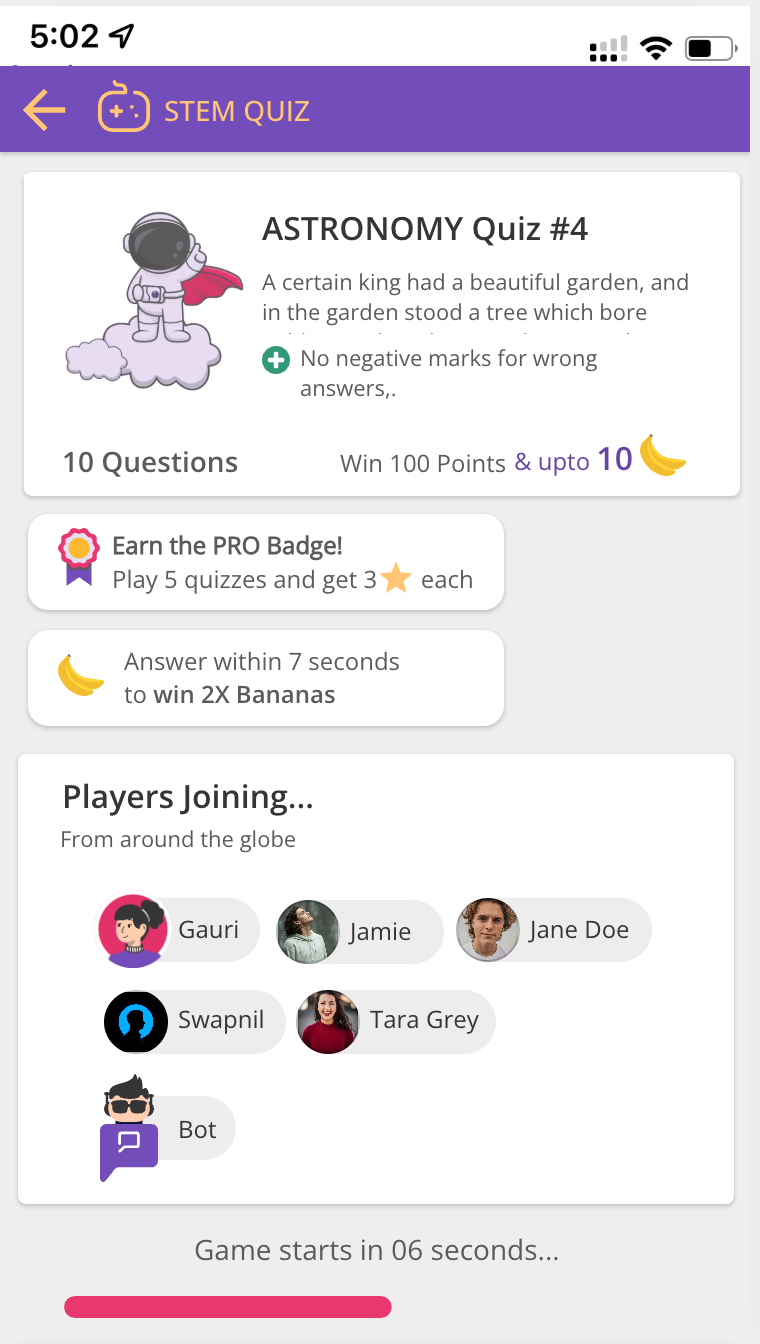
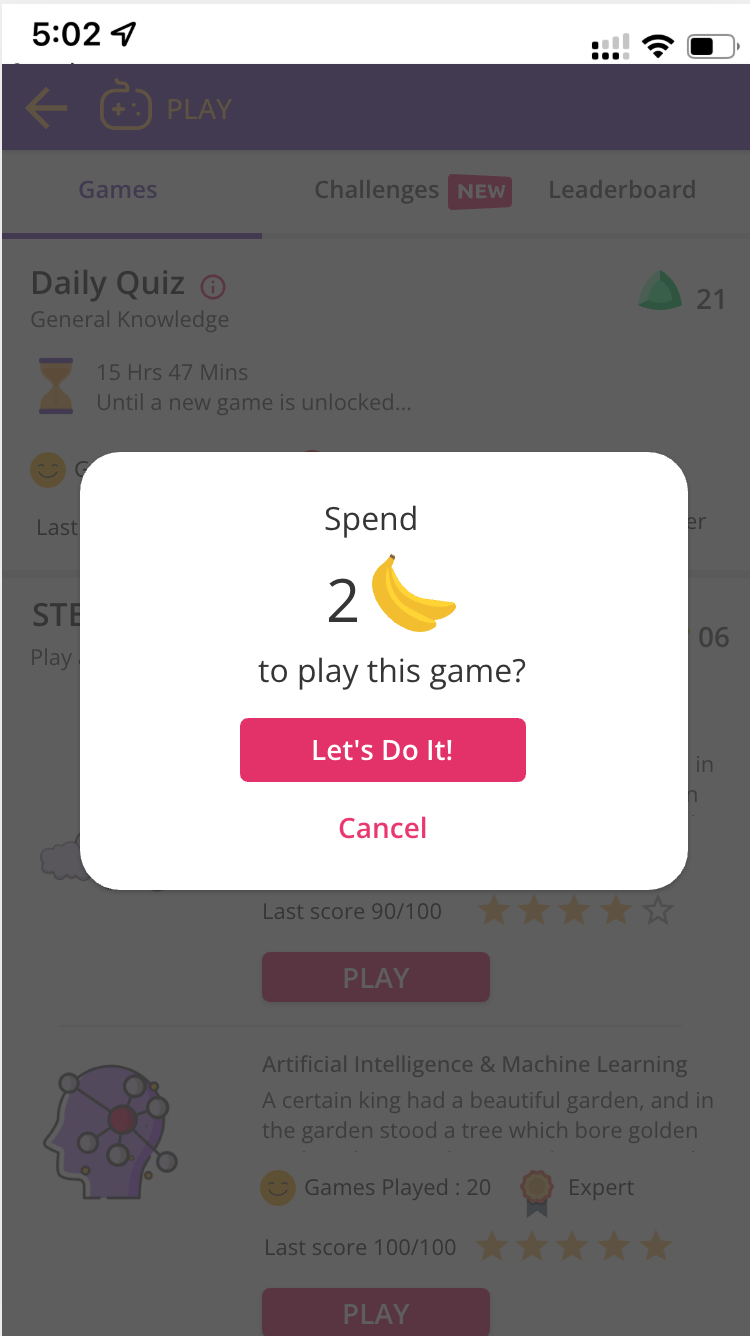
The quiz lobby showed "Players Joining... From around the globe" with real player avatars and a countdown timer, creating anticipation and social proof. The banana spend-to-play mechanic (2 bananas per game) created a deliberate economy that made each quiz feel valuable rather than disposable.

Purple Tutor Play section with Daily Quiz, STEM Quiz, and score tracking
Play — Games, Challenges & Leaderboard
Purple Tutor quiz lobby showing players joining from around the globe with countdown timer
Play — Multiplayer quiz lobby
Purple Tutor live leaderboard during quiz showing player rankings and banana rewards
Play — Live leaderboard & rewards
Surface 03

Social Challenges — Create, Configure, Compete

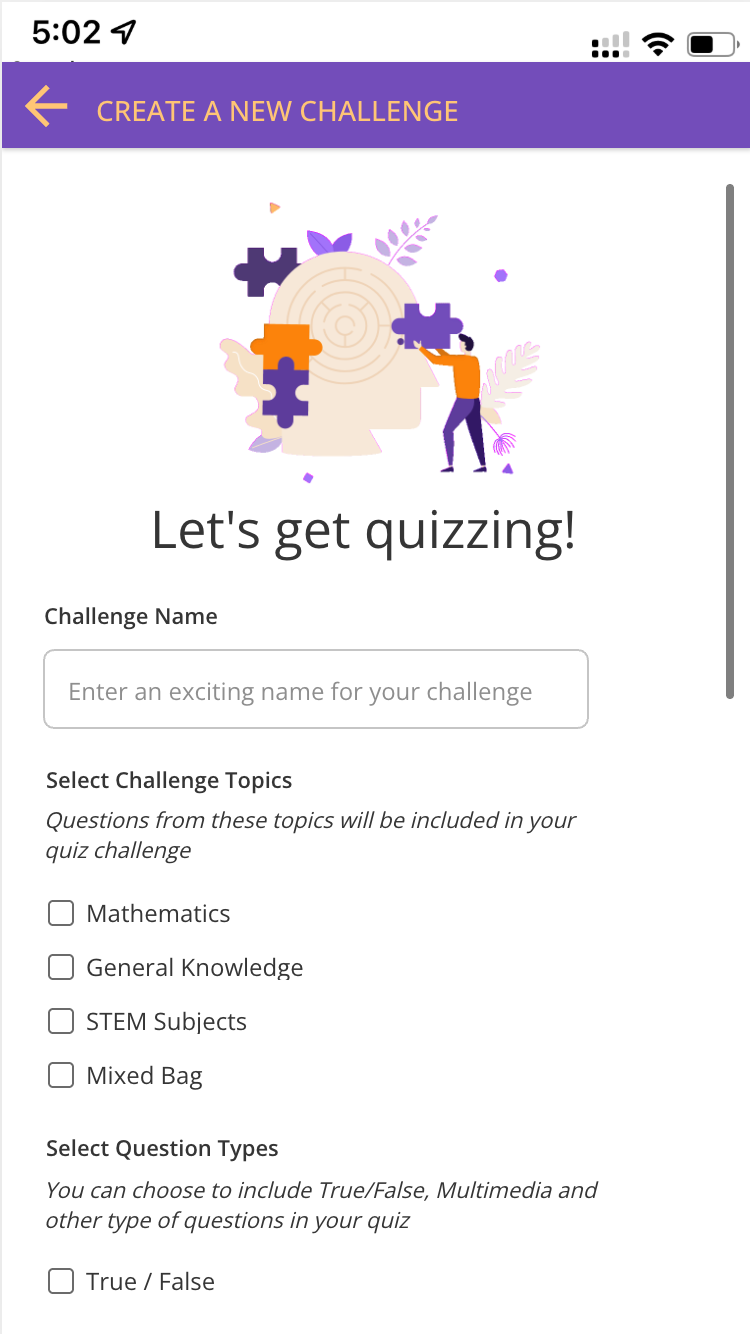
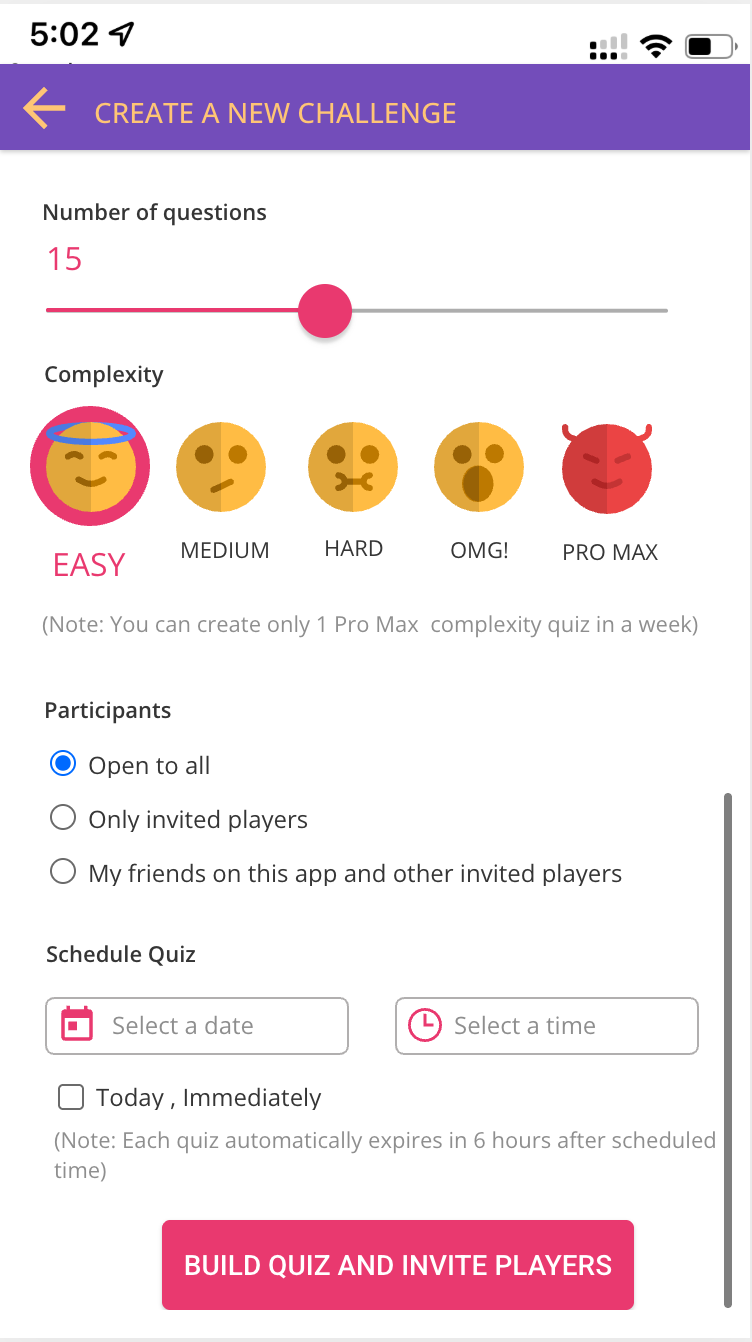
The "Create a New Challenge" flow empowered children to become quiz creators. They could name their challenge, select topics (Mathematics, General Knowledge, STEM Subjects, Mixed Bag), choose question types (True/False, Multimedia), and set the number of questions using an intuitive slider. The five complexity tiers — Easy, Medium, Hard, OMG!, and Pro Max — used playful face icons that made difficulty selection feel like picking a game mode.

Challenge creators could choose between Open to all, Only invited players, or Friends on the app — giving them control over competition scope. Quiz scheduling with date and time pickers, plus a "Today, Immediately" option, let children set up both impromptu and planned competitions.

Purple Tutor Create a New Challenge screen with topic and question type selection
Challenge — Topic & type selection
Purple Tutor challenge configuration with difficulty tiers, participant options, and scheduling
Challenge — Difficulty & scheduling
Purple Tutor banana currency spend dialog for quiz entry
Challenge — Banana currency economy
Surface 04

Parent Experience — Track, Book, Trust

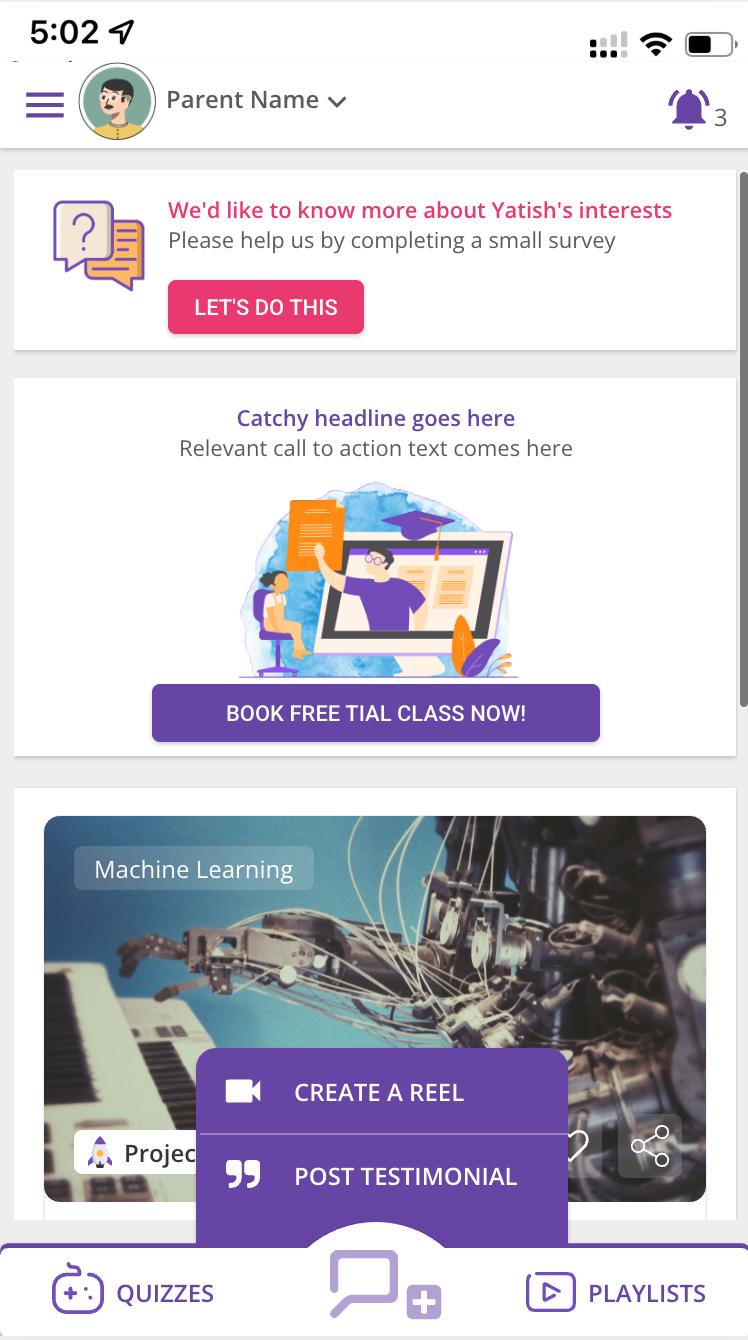
The parent dashboard surfaced three critical actions: tracking their child's learning interests through brief surveys, booking free trial classes, and receiving personalised notifications. The interest survey ("We'd like to know more about Yatish's interests") used the child's actual name, making it feel like a conversation rather than a form.

The trial class booking flow was designed for maximum conversion — a clean, illustrated screen with date picker, time picker, and pre-filled contact number. The encouraging "Great decision!" headline and warm illustration reinforced the parent's choice, reducing booking abandonment.

Purple Tutor parent dashboard with interest survey, trial class CTA, and learning content
Parent — Dashboard with survey & CTA
Purple Tutor Book Free Trial Class screen with date, time, and contact selection
Parent — Trial class booking
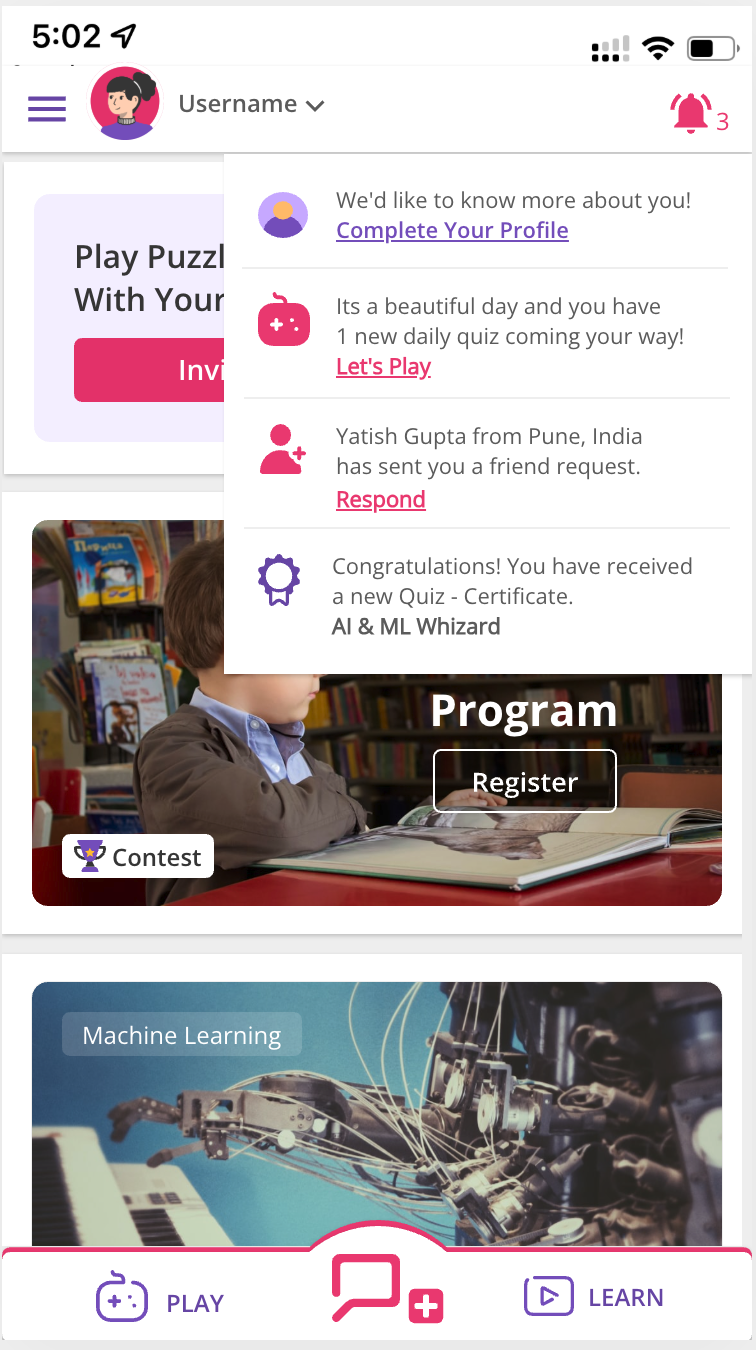
Purple Tutor notification center with personalised alerts for surveys, daily quizzes, friend requests, and certificates
Parent — Notifications & engagement
Governing Principles

Four Rules for Every Screen

These principles governed every design decision on Purple Tutor — from quiz flows to parent dashboards.

01
Play First, Learn Always
Every learning interaction must feel like play. If a child wouldn't voluntarily choose to do it, the design isn't good enough. Quizzes are games. Progress is a leaderboard. Curriculum is an adventure.
02
Parents Trust Through Visibility
Parents can see exactly what their child is learning, how they're performing, and what comes next. The parent dashboard is the proof layer — turning educational promises into observable outcomes.
03
Reward the Habit, Not Just the Score
Daily login streaks, banana earnings, and tier progression reward consistency over perfection. A child who shows up every day and scores 60% is more valuable than one who aces a quiz once and never returns.
04
Global by Default
Multiplayer quizzes match children across 75+ countries. The "Players Joining... From around the globe" lobby makes every quiz feel like a world event — broadening horizons while learning STEM.
Impact & Results

From Startup to Acquisition

Purple Tutor's gamified, dual-audience approach delivered measurable results — ultimately leading to acquisition by Miko.

150K+
Students onboarded across 75+ countries worldwide
400+
Employees at time of acquisition scaling operations globally
Acquired by Miko

"At Purple Tutor, we believe that every child is a unique learner and therefore we put extra efforts to understand the learning needs of your child and create a customised learning path exclusively for him/her."

Purple Tutor — Platform Philosophy

The platform's success in creating a genuinely engaging educational experience — where children voluntarily opened the app to play quizzes and challenge friends — was validated when Miko acquired Purple Tutor to integrate live coding classes, gamified learning, and AI-driven curriculum into their hardware ecosystem of companion robots serving children aged 5 to 12 across 140+ countries.

For me, this project reinforced a core belief: the best edtech products don't feel like education at all. When a child asks to "play Purple Tutor" instead of being told to "study coding," you've won the design challenge.

The Framework

Deep Dive Design in Action

How co-creative collaboration with Purple Tutor's founders and educators produced a platform that made coding feel like play.

Designing for children is fundamentally different from designing for adults. Attention spans are shorter. Feedback must be immediate and rewarding. Navigation must be intuitive enough for a 5-year-old, yet rich enough for a 12-year-old. Every design decision had to pass a simple test: would a child choose this over YouTube?

My approach was rooted in co-creation with both audiences. We observed children using early prototypes, watching where they tapped instinctively, where they got stuck, and what made them smile. Parents reviewed dashboard concepts and told us exactly what "proof of learning" meant to them. The IIT Bombay educators ensured curriculum integrity was never sacrificed for gamification.

This project — executed through my consultancy Article8 — demonstrated a key Deep Dive Design principle: when you're designing for children, you're actually designing for two audiences at once. The child's delight and the parent's trust are inseparable.

Ishdeep.
Staff Product Manager UX · 18+ Years in Design & Product