Designing Hullo — an AI-enabled real estate consulting platform currently in development, with a vision to take the complete property acquisition experience online.
For a 27–35 year old working professional in India, acquiring real estate is as involving as running a side business — and the results aren't even guaranteed.
Hullo is born from Elevare Group — incorporated in 2017 with the aspiration to elevate the entire service delivery experience in the real estate domain. With experience transacting over 3 million square feet and $108 million in cumulative property deals with clients like Siemens, TCS, Cummins, and Trimble, the founders identified a fundamental problem: the property buying journey is fragmented, tedious, and technology-starved.
Hullo — "AI Enabled Space Technology" — is their answer. A tech-enabled real estate consulting platform with a vision to take the complete property acquisition experience online. Not just listings, but the entire journey: search, discovery, comparison, virtual inspection, mortgage, documentation, registration, and allied services — all in one place. The platform is currently in active development.
The buyers aren't casual browsers. They're working professionals who work 60+ hours a week, commute 90 minutes daily, and are trying to make the biggest financial decision of their lives using outdated tools and fragmented services. Developers, meanwhile, lack a platform for global outreach and comprehensive technology beyond basic listing. Both sides are underserved.
Customers and developers both suffered from fragmented tools, unreliable information, and a complete absence of end-to-end solutions.
For customers, the pain was multi-dimensional: no 360-degree home buying solution existed. Listing information was unreliable and irrelevant. Loan processing was tedious and unintegrated. Search and discovery tools were outdated. There was no way to inspect properties virtually, and documentation and registration required physical presence at every step. Buyers needed access to credible agents and a single point of contact — but got fragmented services instead.
For developers, the gaps were equally severe: no platform for global outreach, no comprehensive tech beyond basic listing portals, and a strong need for better, affordable customer acquisition. The existing landscape — split between listing portals, institutional brokerages, individual brokers, and allied service providers — left everyone underserved.
Competing against established listing portals like 99acres and MagicBricks, institutional brokerages, and individual brokers, Hullo needs to offer something none of them can: an end-to-end, technology-enabled property acquisition experience that serves both sides of the marketplace.
User interviews with prospective home buyers, renters, and real estate agents. Competitive analysis of Zillow, Realtor.com, and Redfin. Market trend research on AR and virtual tours.
The design decisions that differentiate Hullo from every listing portal in India's crowded proptech landscape.
The key features I'm designing to transform property acquisition from a fragmented ordeal into a seamless, technology-enabled experience.
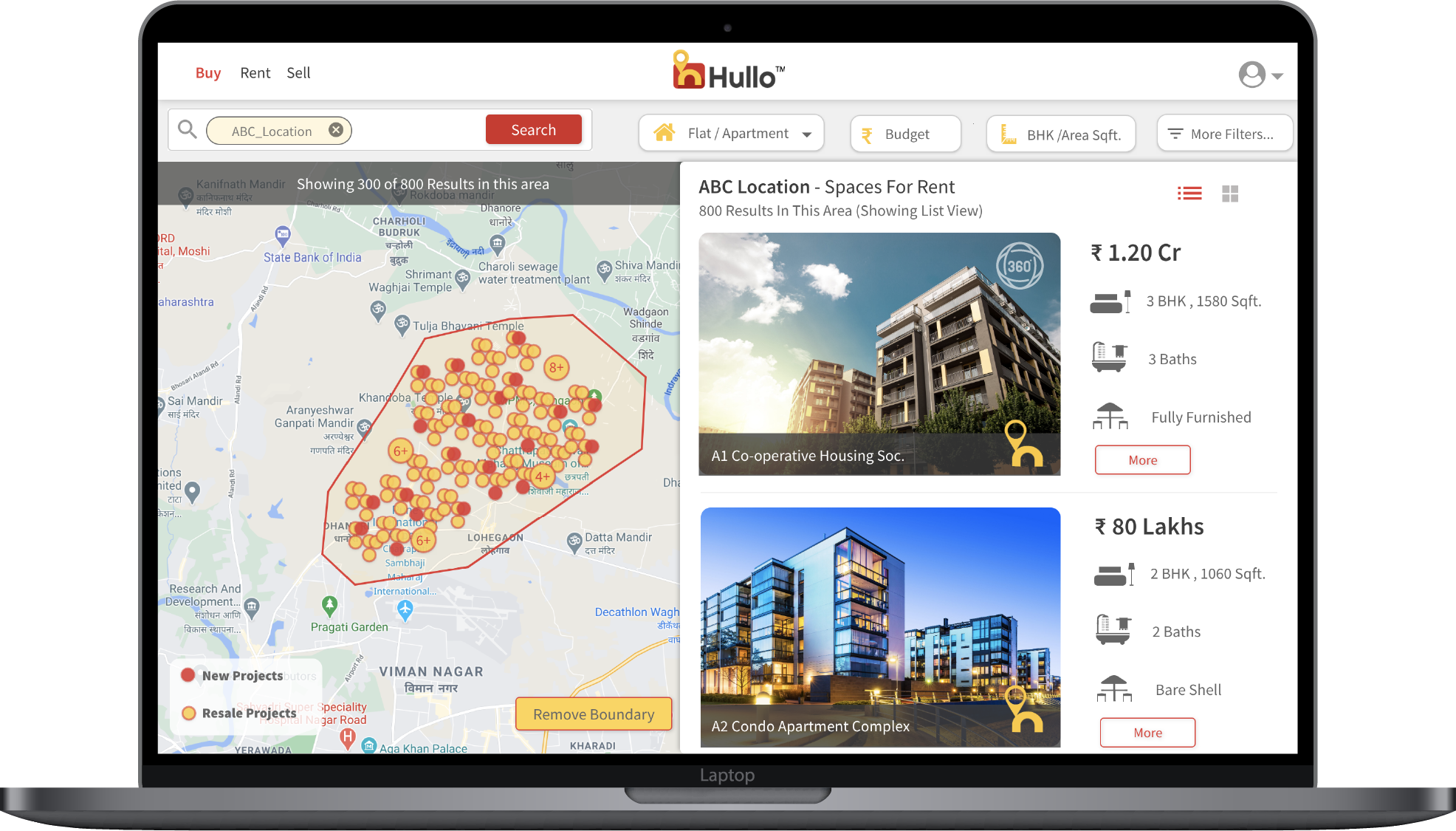
The map-powered search is Hullo's primary discovery surface. Buyers can draw custom geographic boundaries to define their search area, then see curated listings — filtered by property type, budget, BHK configuration, and more — plotted directly on the map. The split-view layout shows the map on the left with a scrollable listing panel on the right, allowing buyers to browse without losing spatial context.
The AI/ML recommendation engine surfaces properties within the drawn boundary, prioritized by relevance to the buyer's preferences and search history. Every listing card shows price, size, BHK, and a direct link to schedule a viewing or open the virtual tour — keeping the path to action short.
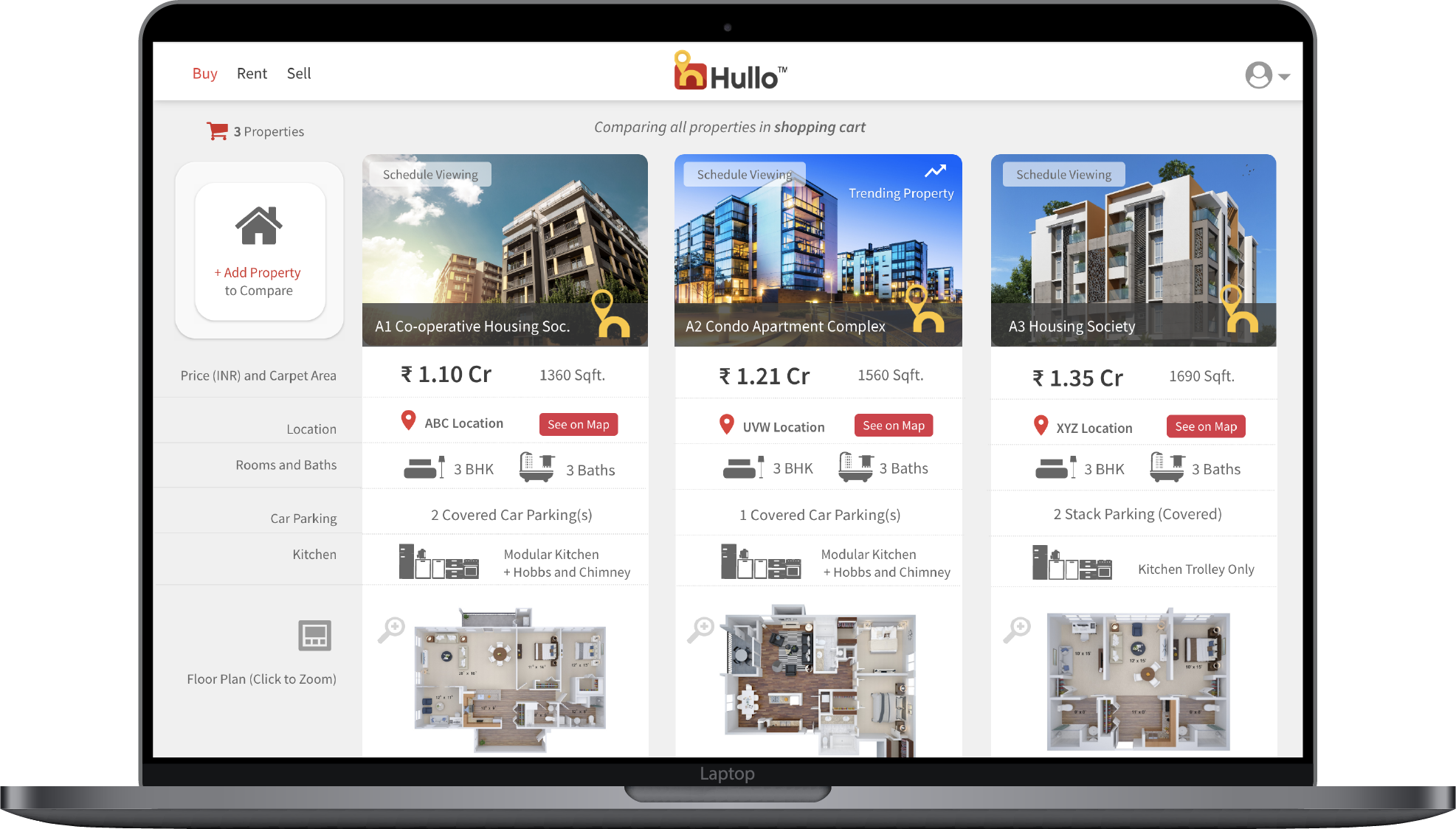
The comparison tool lets buyers add properties to a structured side-by-side view — comparing price, carpet area, location, rooms, bathrooms, parking, kitchen configuration, and floor plans in a clean, scannable grid. No more manual spreadsheets. The shopping cart metaphor ("Comparing all properties in shopping cart") made the complex feel familiar.
Integrated alongside the comparison is the Mortgage Eligibility Calculator — allowing buyers to input their gross income, existing EMIs, and see instant approval likelihood and monthly payment estimates. This removed the guesswork from financial planning and gave buyers confidence to move forward.
The augmented reality search feature transforms the physical environment into a property discovery interface. Buyers point their phone camera at a neighborhood and see available properties overlaid on the real-world view with pricing, configuration, and proximity details. It's a seamless on-the-move property search experience.
This isn't a gimmick — it addresses a real discovery gap. When professionals commute through areas they'd consider living in, the AR layer lets them gain detailed property insights instantly, without stopping to search online. The technology bridges the gap between physical exploration and digital information.
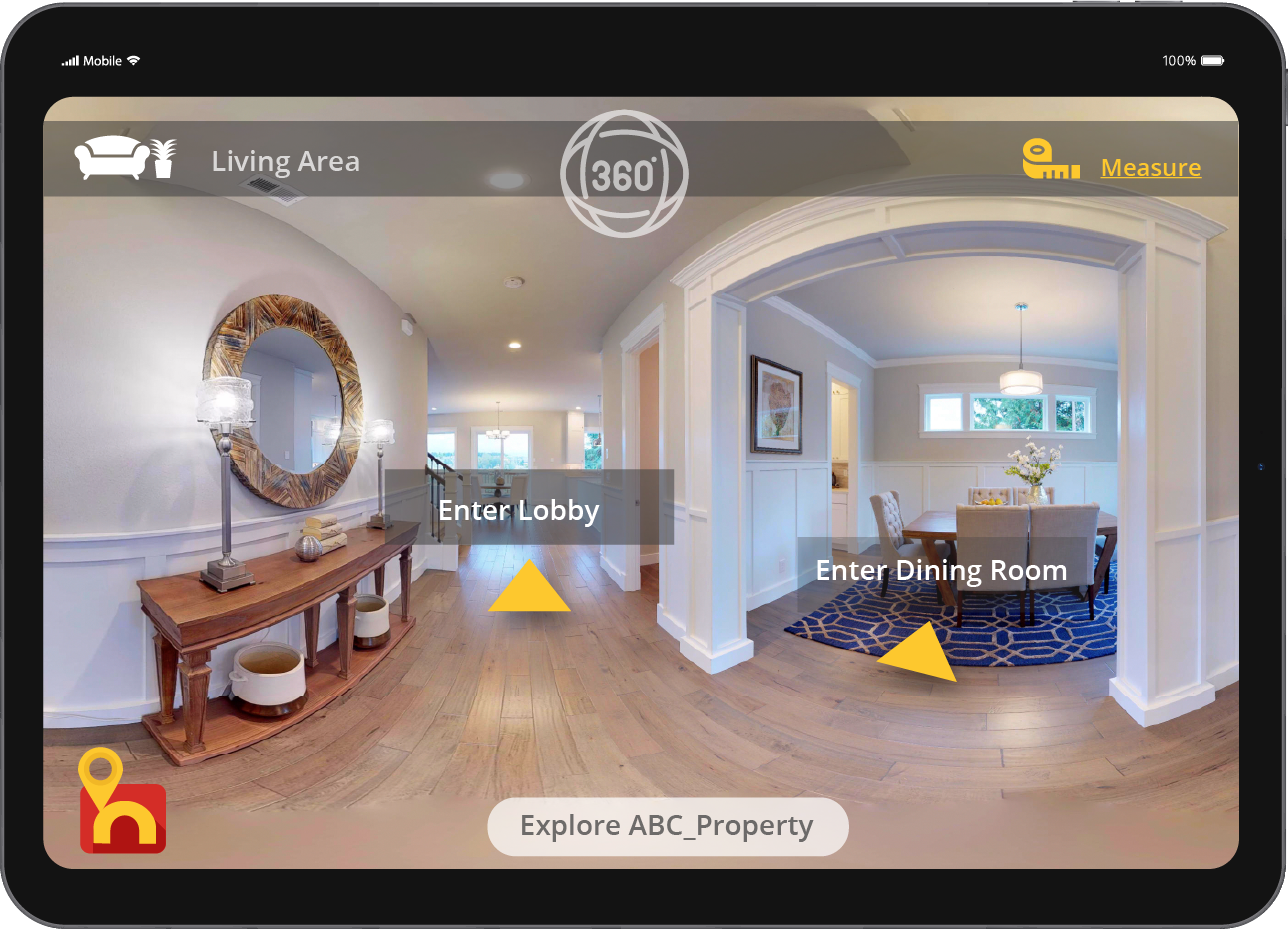
The virtual tour system operates in two modes: agents use the proprietary Creator app to capture and build engaging 360-degree property tours, and buyers use the Explorer to inspect properties in immersive detail from the convenience of their home. This directly reduces the need for physical site visits during the shortlisting phase.
For working professionals who can't take half-day leaves for property visits, the virtual tour is transformative. It expands the number of properties they can meaningfully evaluate — from 2–3 physical visits on a weekend to 10+ virtual explorations in an evening.
The Virtual Property Expo brings the experience of a physical property exhibition online — allowing developers to showcase their projects to a digital audience through curated virtual booths, interactive floor plans, and live walkthroughs. Buyers can attend from anywhere, browse multiple developers, and shortlist properties without fighting weekend crowds at convention centers.
For developers, this is a powerful customer acquisition channel with measurable engagement and lower costs than physical exhibitions. For buyers, it's a time-efficient way to explore multiple options in a structured, comparison-friendly environment.
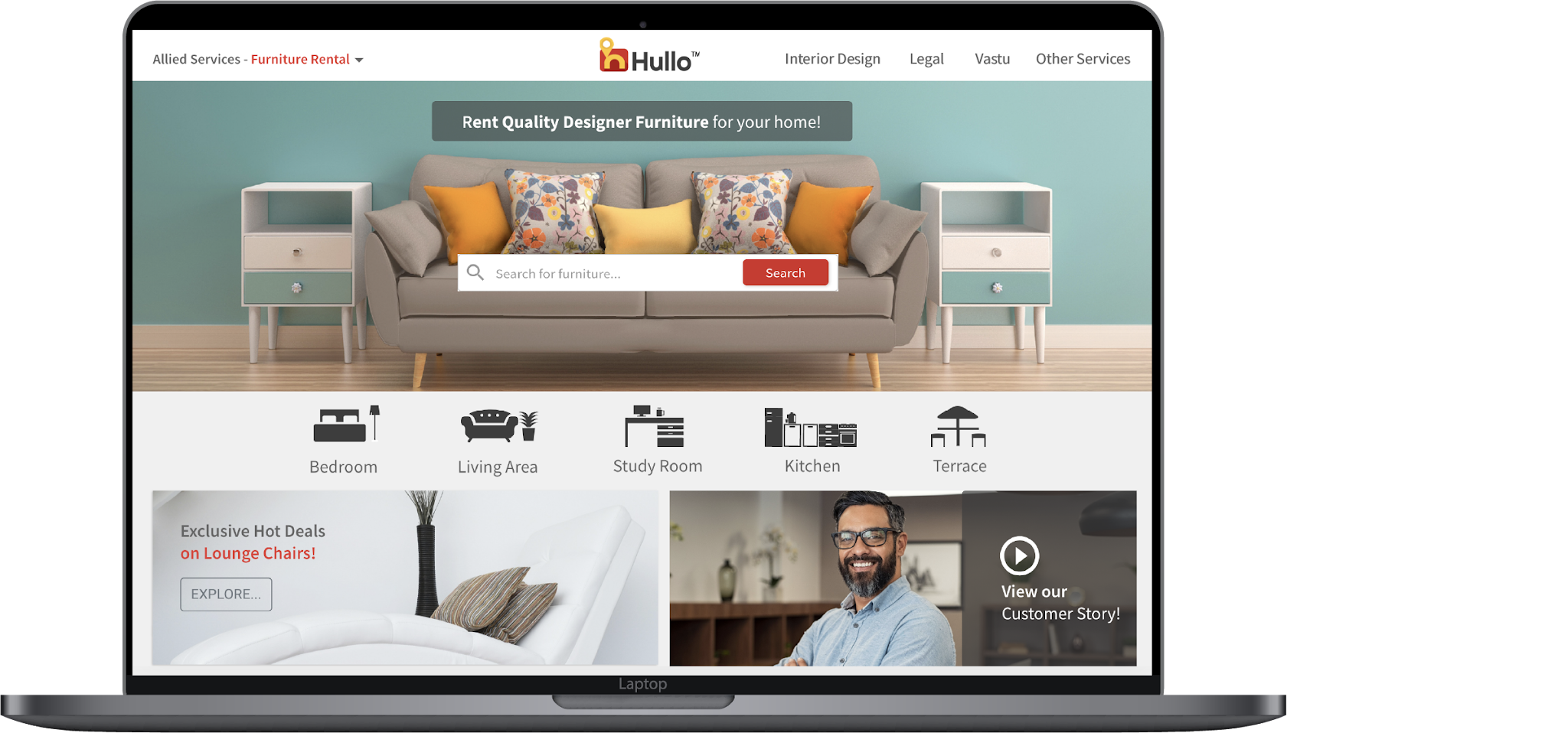
Hullo extends the experience beyond the purchase with an integrated allied services marketplace — legal verification, furniture rental, interior design, and Vastu consultation. Each service is vetted and accessible directly from the platform, eliminating the post-purchase scramble for reliable providers.
This layer is strategically important: it creates platform stickiness beyond the one-time transaction. By being useful before, during, and after the purchase, Hullo positions itself as the buyer's long-term real estate companion — not just another listing portal.
For the supply side, Hullo offers developers a holistic solution beyond listing: marketing and outreach tools, lead generation dashboards, and sales pipeline management. The platform gives developers access to a curated, intent-driven buyer base and tools to showcase their projects through virtual tours, exhibitions, and targeted campaigns.
This two-sided marketplace approach — serving both buyers and developers with deep, purpose-built tools — is what differentiates Hullo from pure listing portals that treat the developer side as a paid advertising channel.
These principles governed every design decision on Hullo — from search flows to property detail pages.
Hullo is bringing a technology-first approach to India's massive proptech opportunity — designing an end-to-end platform that addresses every pain point in the property acquisition journey.
Although Hullo is still in active development, the design work has produced a comprehensive platform vision that addresses the full property acquisition lifecycle. Seven major features — AR Property Search, Map-Based Discovery, Virtual Tours, Property Comparison, Mortgage Calculator, Virtual Exhibitions, and Allied Services — have been designed to serve three user segments: home buyers, real estate developers, and allied service providers.
The platform is being built to deliver an end-to-end experience: search, compare, finance, document, register, and furnish — all from one place. The design process has been rooted in deep user research and iterative prototyping, ensuring every feature solves a real pain point validated through interviews with buyers, agents, and developers.
With India's real estate market projected to reach $1 trillion by 2030 and over 500 million urban Indians as the target demographic, Hullo is positioned to capture a massive opportunity by offering what no competitor currently provides — a truly integrated, technology-first property acquisition experience.

"Our vision is to take the complete property acquisition experience online. Hullo creates an engaging and insightful property acquisition experience for our customers using technology as an enabler."
How user-centered design and iterative prototyping is turning a real estate consulting firm's domain expertise into a technology-first platform.
Designing Hullo means translating deep real estate domain knowledge into intuitive digital experiences. The founders understand the market viscerally, but translating that understanding into user interfaces requires a structured design process: research, personas, user flows, wireframes, interactive prototypes, and continuous iteration.
The UX approach is rooted in co-creation with domain experts. Rather than designing in isolation and presenting finished mockups, I work alongside the founding team — conducting user interviews together, mapping pain points collaboratively, and validating designs with real buyers and agents at every stage. The result is a platform that feels like it's built by people who have deep experience in real estate.
This project — executed through my consultancy Article8 — demonstrates a key Deep Dive Design principle: the best proptech products emerge when you combine technology capability with genuine domain intimacy. Hullo isn't being designed for real estate — it's being designed with real estate professionals, from day one.