Designing Benow — India's pioneering UPI merchant platform connecting buyers, merchants, and brands. Acquired by Pine Labs Group.
In a country where millions of small merchants still relied on cash and paper ledgers, Benow set out to make every transaction digital, instant, and effortless.
Incorporated in 2016, Benow (Cashless Technologies India) pioneered aggregating merchants on UPI. The original vision was ambitious: create a single app that served three fundamentally different user groups — individual buyers splitting bills with friends, neighborhood merchants offering credit to regulars, and brands reaching new customers through targeted promotions.
The platform wasn't just a payment gateway. It was a complete digital commerce ecosystem — combining P2P payments, bill splitting, digital Sodexo coupons, merchant credit (E-Khaata), and brand promotion into one cohesive experience. Benow won Best Instore Payment Solution at the Payments & Cards Awards multiple years running (2017, 2018, 2019). By 2019, the product had evolved into a full merchant POS platform — pioneering deviceless EMI, partnering with Samsung, and earning PCIDSS certification.
The platform expanded rapidly through 2020–2021 with HDFC Bank and ICICI Bank partnerships, deferred cashback capabilities, and business expansion with consumer electronics brands like LG, Samsung, and Panasonic. Benow achieved an industry first with Instant Cashback on Cards in 2021, was acquired by Mosambee, and subsequently acquired by the Pine Labs Group in 2022 as an independent entity. By 2023, the platform had pioneered Instant UPI Cashback — a fitting capstone to a journey that began with aggregating merchants on UPI in 2016.
Designing separate workflows for buyers, merchants, and brands — each with distinct mental models — without fragmenting the experience.
The core design challenge was unlike a typical single-audience app. Benow had to serve three primary user groups with fundamentally different needs, contexts, and technical literacy. A buyer splitting a dinner bill needs speed and simplicity. A merchant tracking credit for 50 regular customers needs structure and accountability. A brand launching a hyperlocal promotion needs reach and analytics.
Each group had distinct interactions with the app, and the challenge was to design separate workflows that catered to these diverse user segments while ensuring a consistent and intuitive user experience. The navigation, visual language, and interaction patterns had to feel unified even when the underlying workflows diverged completely.
Getting this wrong would mean three mediocre tools instead of one great platform. In India's hyper-competitive fintech market — with PhonePe, Google Pay, and Paytm already dominant — there was no room for a confusing user experience.
User interviews and surveys with buyers, merchants, and brands to validate needs and uncover pain points across all three segments.
The design decisions that defined the platform's identity and differentiated it in India's crowded payments landscape.
The key features I designed across Benow's buyer, merchant, and brand experiences.
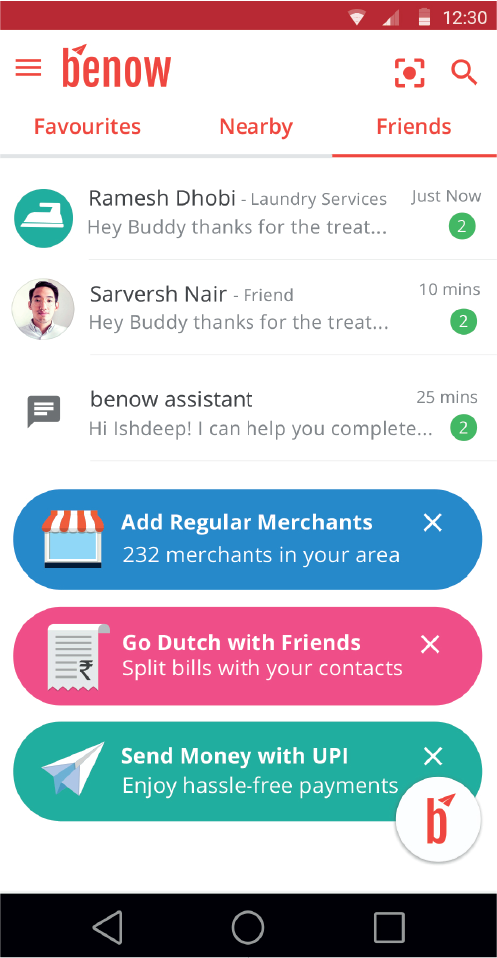
The buyer experience centered on three core actions: sending money via UPI, splitting bills with friends ("Go Dutch"), and discovering nearby merchants. The home screen used a chat-style feed showing Favourites, Nearby merchants, and Friends — making payment history feel like a conversation thread rather than a transaction log.
Key features included the "Add Regular Merchants" prompt (surfacing 232 merchants in the user's area), the "Go Dutch" bill-splitting flow, and UPI payments — all accessible from prominent, color-coded action cards at the bottom of the home screen.
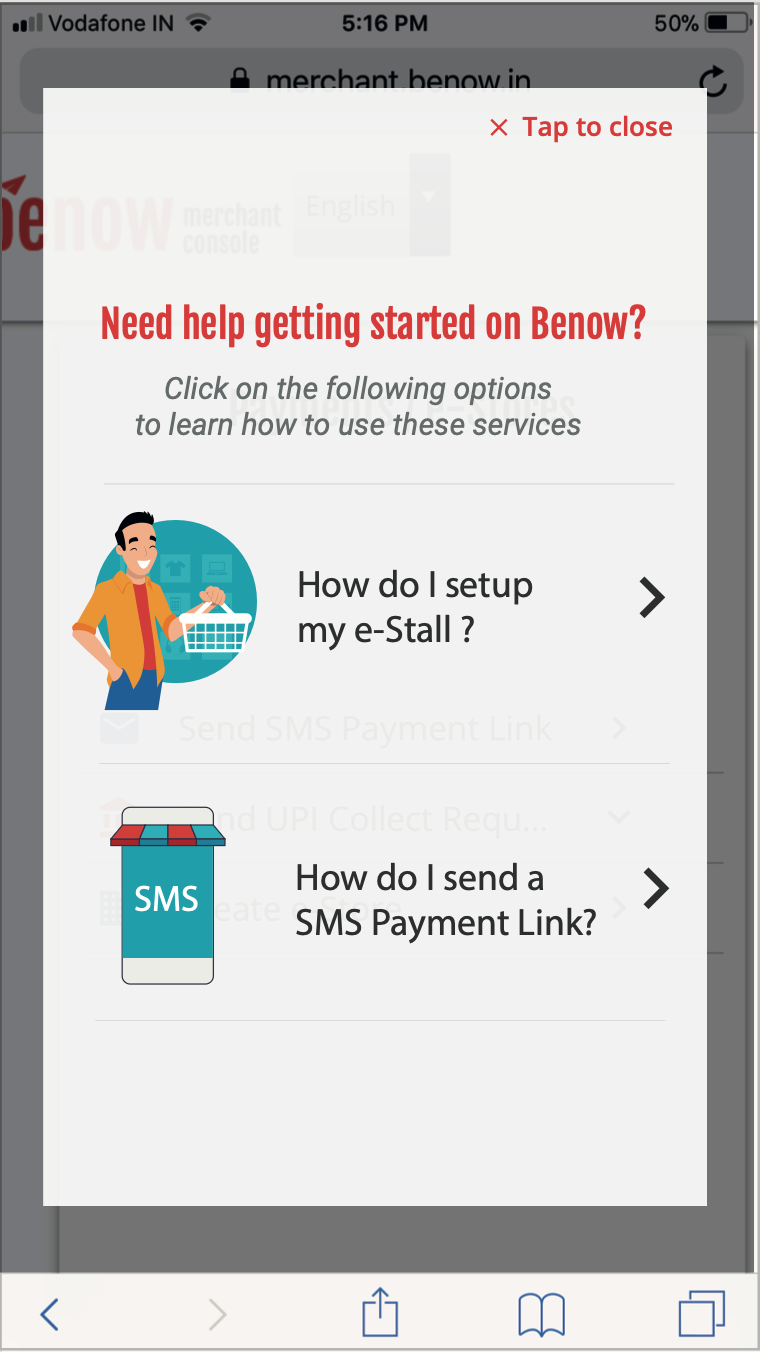
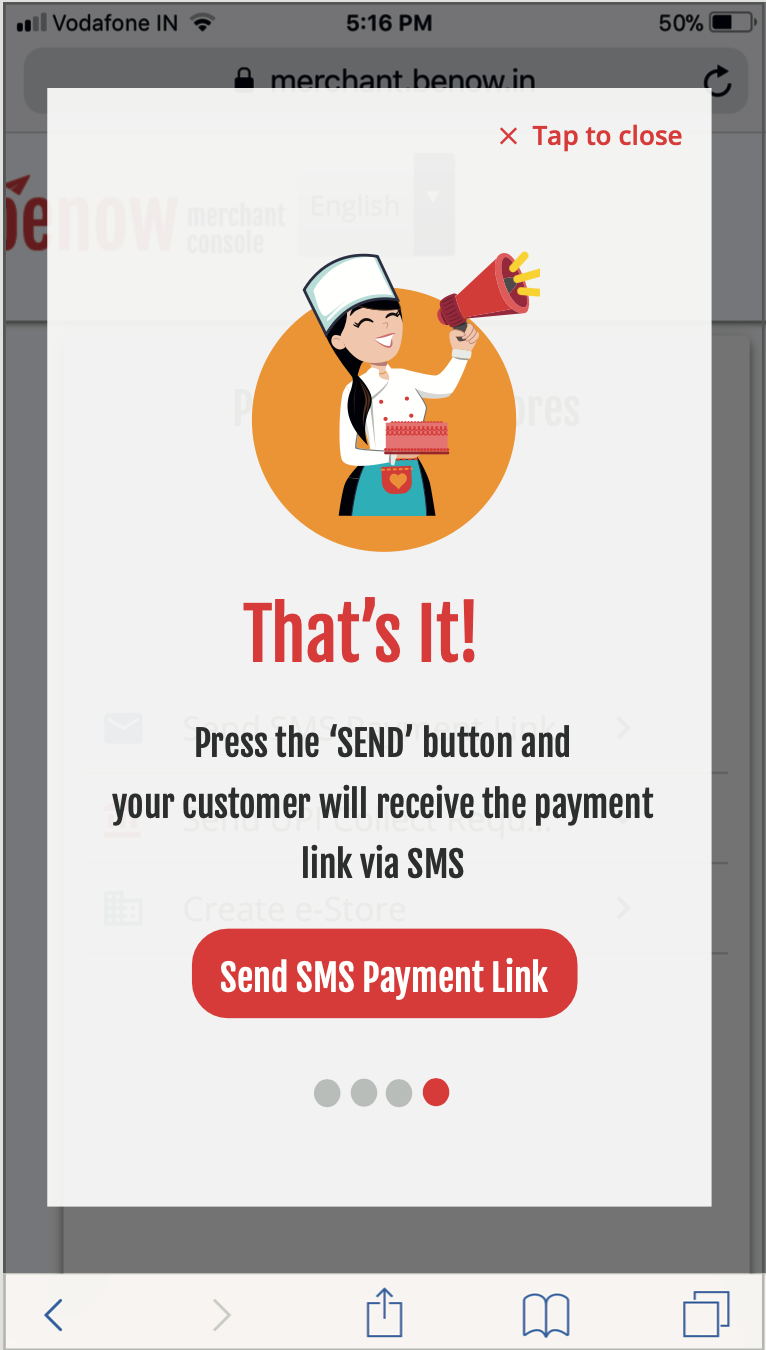
The merchant web console was designed for small business owners who were often first-time digital users. The experience prioritized guided onboarding with illustrated walkthroughs — showing merchants how to set up their e-Stall, send SMS payment links to customers, and manage their digital credit ledger (E-Khaata).
Every interaction was designed to minimize text and maximize visual cues. The step-by-step wizard used friendly illustrated characters and a clear "That's It!" confirmation pattern that built merchant confidence in a tool most had never used before.
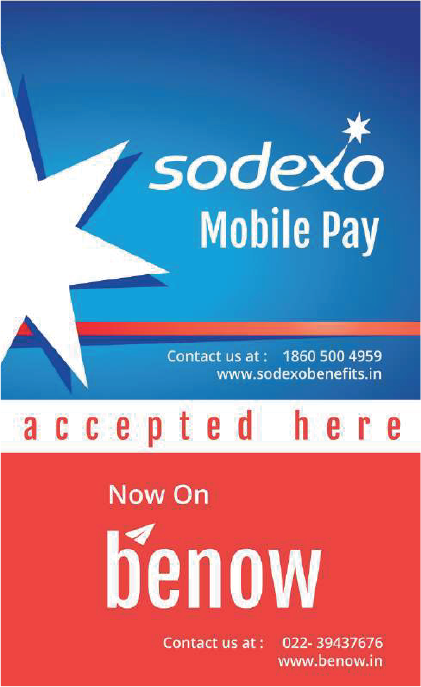
To accommodate brands, we created a dedicated section in the app for promotional campaigns and strategic partnerships. The Sodexo integration was a marquee feature — allowing Sodexo Mobile Pay cardholders to transact directly through Benow, bridging corporate meal benefits with neighborhood merchants.
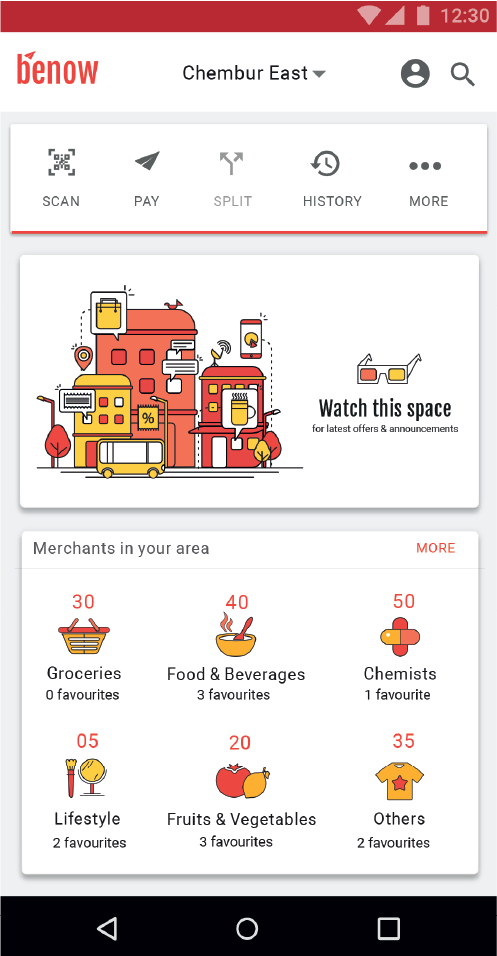
Brands could easily create, schedule, and track their offers to attract buyers. The "Watch this space" banner on the merchant discovery screen doubled as promotional real estate, giving brands a native advertising surface that felt informational rather than intrusive.
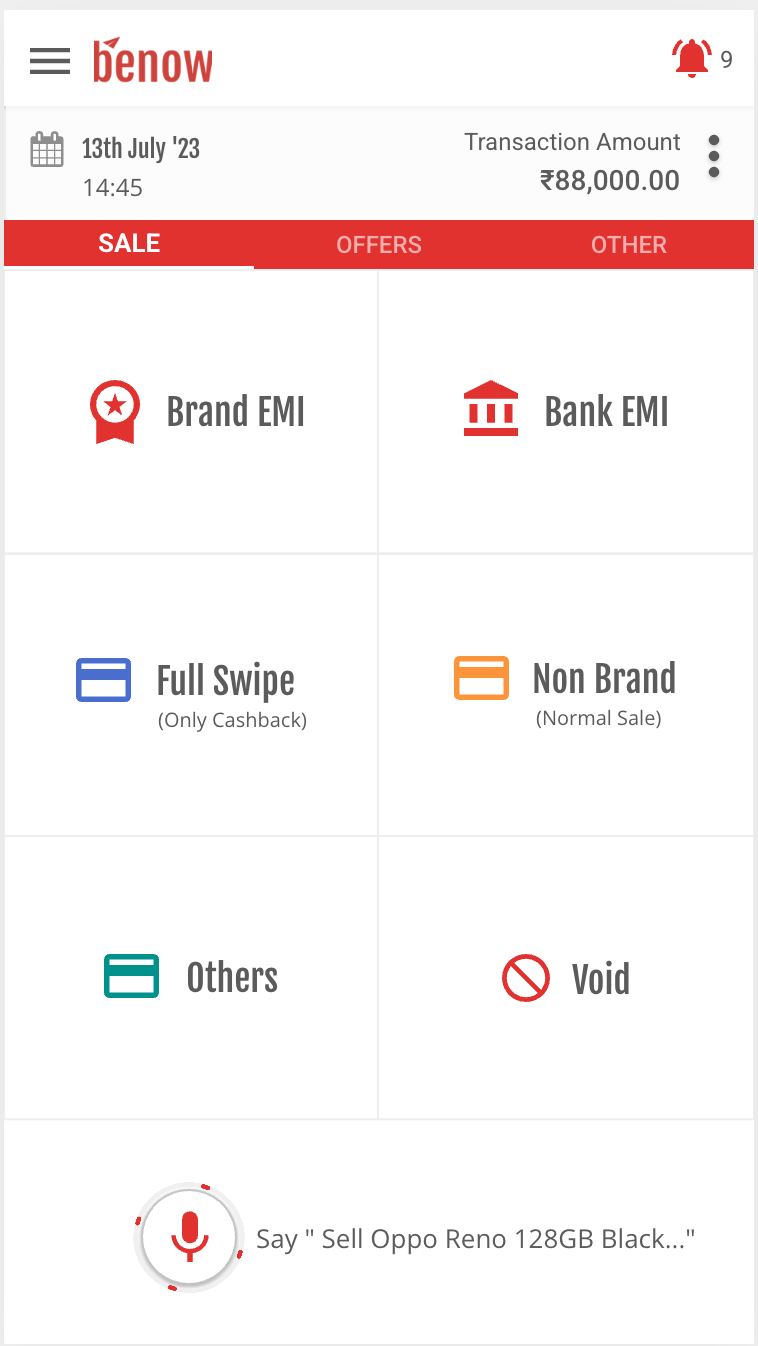
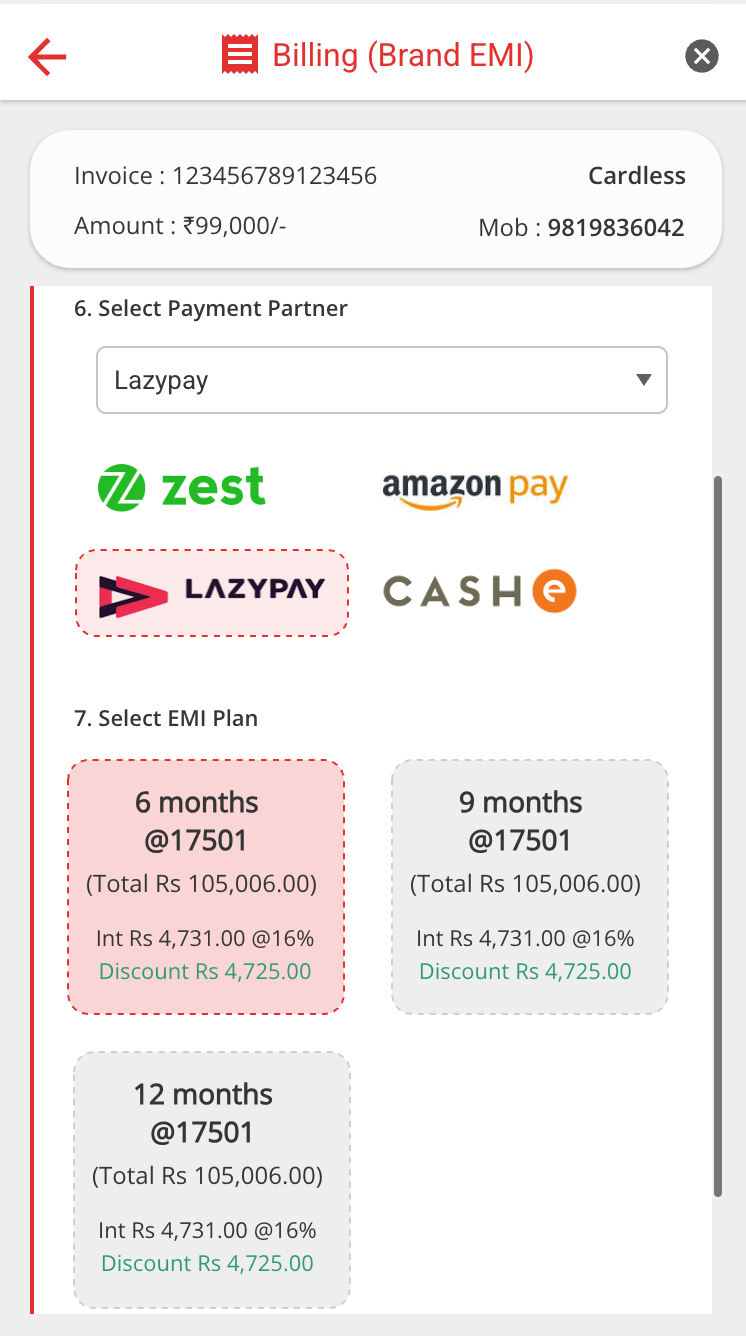
By 2019, Benow had evolved from a consumer P2P app into a full merchant point-of-sale platform — pioneering deviceless EMI and partnering with Samsung. The merchant POS app enabled retailers to process Brand EMI, Bank EMI, full swipe transactions, and cashback offers — turning every neighborhood store into a fintech-enabled business. The interface supported voice-activated product search and integrated payment partners like LazyPay, Amazon Pay, Zest, and CashE for flexible EMI plans.
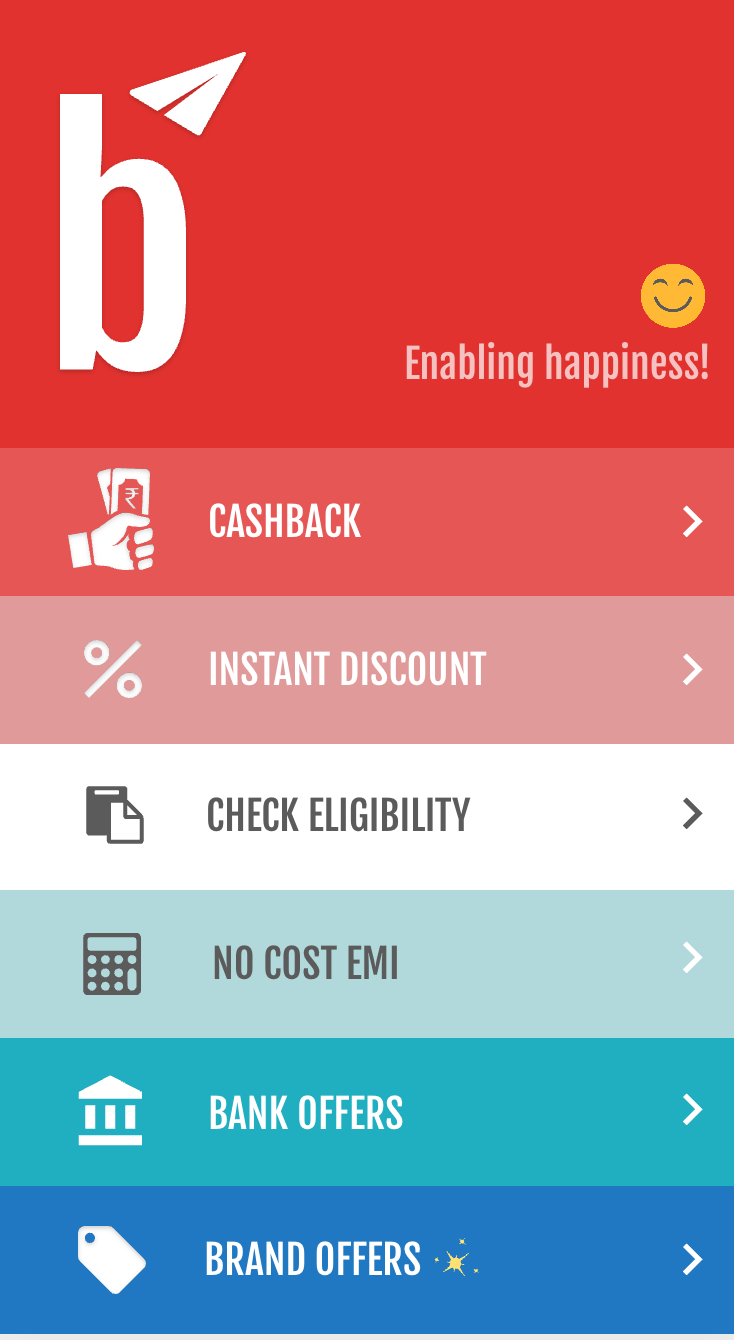
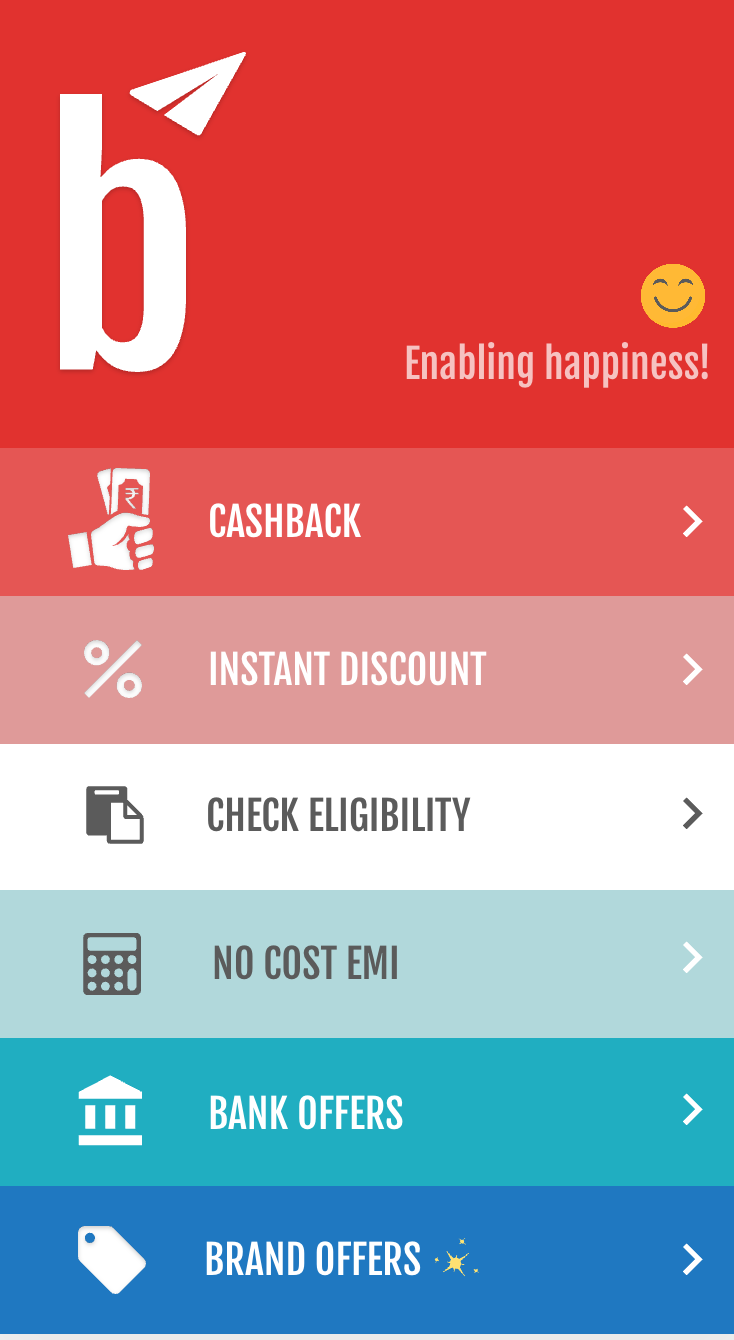
Through 2020–2023, the platform expanded with HDFC Bank and ICICI Bank partnerships, enabled deferred and instant cashback on cards, and grew across CDIT brands (LG, Samsung, Panasonic). The offers hub — surfacing cashback, instant discounts, no-cost EMI, bank offers, and brand offers — became the central merchant surface. This evolution from P2P to POS led to acquisition by Mosambee in 2021 and subsequently by the Pine Labs Group in 2022.
These principles governed every design decision on Benow — from onboarding flows to payment confirmations.
Benow's UX-focused approach delivered measurable results across all three user segments — ultimately leading to acquisition by Pine Labs.
"High user satisfaction ratings across all user groups. Increased adoption by both individual users and businesses. Successful onboarding of numerous brands offering promotions. Positive feedback from merchants regarding the ease of managing credit transactions."
The platform's success in creating a genuinely multi-sided marketplace — where buyers, merchants, and brands each found independent value — was ultimately validated when Pine Labs acquired Benow, integrating its merchant network and payment technology into their broader point-of-sale ecosystem.
For me, this project was a masterclass in designing for multiple audiences simultaneously. The discipline of keeping three mental models coherent within one product influenced every multi-stakeholder project I've led since.
How co-creative collaboration with Benow's product and engineering teams produced a platform that served three audiences without compromise.
Designing for buyers, merchants, and brands simultaneously meant constant negotiation between competing priorities. Buyer simplicity vs. merchant capability. Brand visibility vs. user experience purity. Speed-to-market vs. design quality.
My approach was rooted in co-creation, not compromise. By bringing stakeholders from each user segment into the design process at structured intervals, we built shared ownership of the solution. Merchants tested buyer flows. Brand partners reviewed merchant onboarding. Cross-pollination produced better outcomes than siloed design ever could.
This project — executed through my consultancy Article8 — reinforced the Deep Dive Design principle that the best multi-audience products emerge when you design with each audience, not just for them.